
Think about the last time you were really, truly stressed out. Maybe you were stuck in a hospital waiting room, staring at a clock that seemed to be moving backward. Or maybe you were stranded at the airport at 2:00 AM, sitting on your suitcase under buzzing fluorescent lights because your third flight in a row got canceled.
Your heart is pounding against your ribs. Your breathing is fast, shallow, and jagged. Your hands are clammy. Your brain feels like a web browser with fifty tabs open—and every single one of them is frozen.
In that moment, your body is in full-blown "Fight or Flight" mode. You aren't "shopping." You aren't "evaluating your options." You aren't thinking about your Net Promoter Score. You are doing one primal thing: scanning the room for Safety.
Now, imagine a well-meaning staff member walks up to you. They've been trained in the corporate gospel of "Customer Delight." They smile excessively. They offer you a branded cupcake. They recite a high-energy, scripted "Wow" greeting designed to blow your mind.
How does that actually feel in your body?
It doesn't feel like a gift. Honestly? It feels like an intrusion. It feels like a threat! It's like someone throwing a surprise party for you while your kitchen is on fire.
When your nervous system is on high alert, a "surprise" isn't fun—it's just another word for "danger." This is the massive blind spot in modern Customer Experience (CX). We are obsessed with trying to "Wow" people who just want to feel calm. We're busy setting off fireworks for customers who are desperately looking for a fire extinguisher.
The Science: How Our Bodies "Read" a Brand
Let's get into the "why" beneath the feeling. Back in the 90s, Dr. Stephen Porges developed something called Polyvagal Theory. It sounds like a complex medical term (and it is), but for us, the core idea is simple: our bodies are constantly running a background app called Neuroception.
Think of Neuroception like your body's internal Wi-Fi scanner. It is constantly pinging the environment—voices, faces, colors, pacing—scanning for cues of safety or danger. Crucially, this happens before your conscious brain even wakes up to process the information.
Your customers' bodies decide if they trust you milliseconds before they ever read your return policy or hear your marketing pitch.
🟢 Safe & Social (The Green Zone)
The ventral vagal state. Your heart rate is steady, your breath is deep, and your "higher brain" is online. You can understand logic, laugh, and connect. This is the only state where true loyalty happens.
🔴 Fight or Flight (The Red Zone)
The sympathetic state. You're anxious, mobilized, and urgent. In this state, the muscles in your middle ear actually shift to tune out human voices. They literally can't hear your help!
🔵 Shutdown (The Blue Zone)
The dorsal vagal state. The customer stops complaining, goes dead silent, and just ghosts you. Corporate calls this "churn." Biology calls it "playing dead."
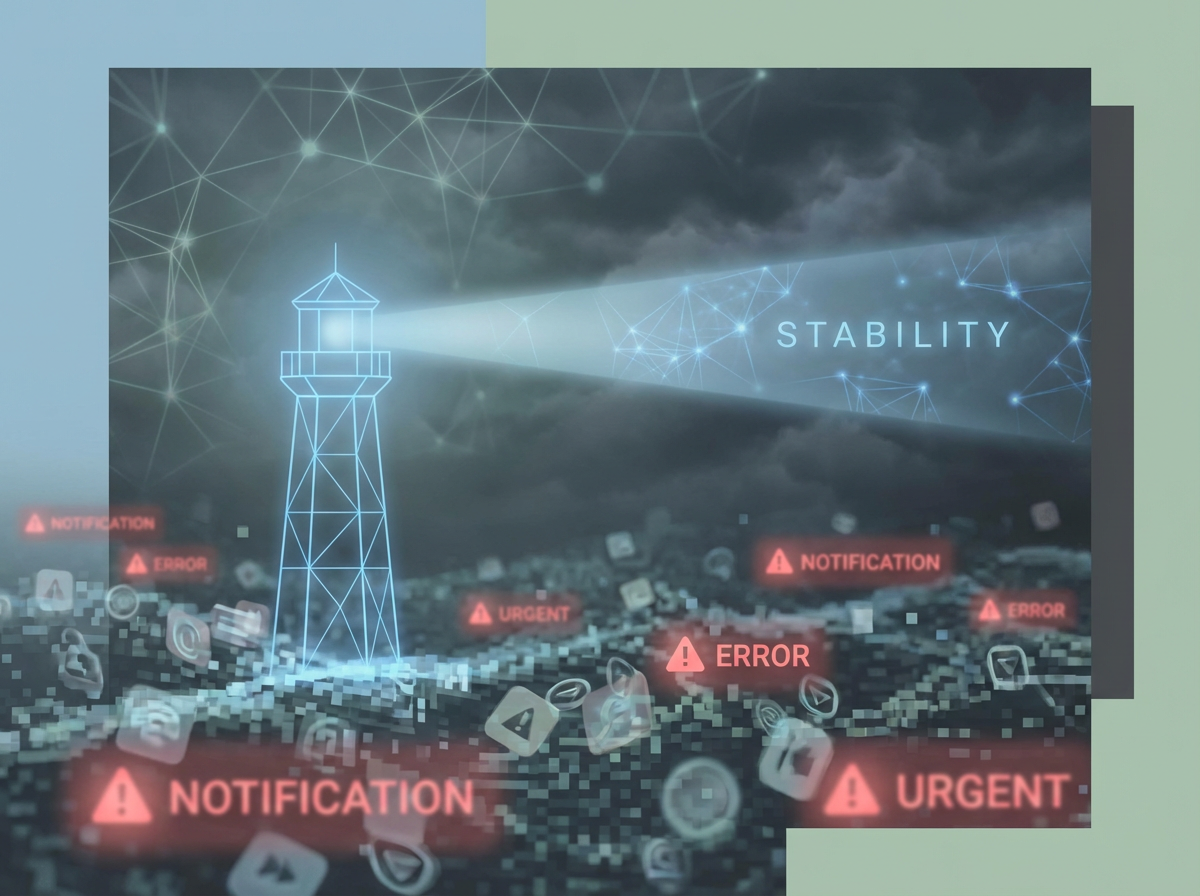
Here is the problem: Most brands are accidentally designed for the Red Zone. They use alarming red notification badges, countdown timers that scream "ACT NOW," and relentless email pings. They are engineered to trigger a hit of adrenaline.
But in a world that is already chronically loud, scary, and stressful, the most valuable thing you can offer isn't more energy—it's Vagal Tone. A "Parasympathetic Brand" acts like a deep physiological breath for the customer. You stop being the noise and start being the noise-canceling headphones.
Interactive infographic — explore the data above
The Enemy: Why the "Wow" Factor is Actually a Trap
We've all been brainwashed by the idea that we need to "surprise and delight" to win. But let's look at that through a biological lens.
Chasing "Wow" moments creates inconsistency. And the nervous system hates inconsistency.
If you give someone a spectacular, over-the-top experience on Monday, but a "standard" (even perfectly fine) one on Tuesday, the brain doesn't register Tuesday as "okay." It registers it as a loss. It feels like a betrayal.
By constantly trying to move the goalposts of "delight," you are inadvertently training your customers to be anxious! They are perpetually waiting for the other shoe to drop.
Real, deep, chemical trust isn't built during the big, flashy peaks. It's built in the plateaus. It's built in the boring stuff. It's that profound, quiet relief of a customer knowing exactly what is going to happen next, every single time.
Dopamine Hits vs. The Oxytocin Bond
Most modern marketing is addicted to Dopamine. Dopamine is the "anticipation molecule." It's that quick, buzzy rush you get from a new feature notification, a gamified badge, or a flash sale. It feels good! But it's a cheap thrill. It wears off fast, and you need a bigger dose next time.
Oxytocin, on the other hand, is the "cuddle hormone." It's the chemical of bonding, safety, and trust. This is the engine of a Parasympathetic Brand.
Dopamine gets them to open the app. Oxytocin gets them to stay for ten years.
The ROI of Calm
You might be thinking, "This sounds nice, but 'calm' sounds boring, and boring doesn't sell."
Actually, Safety sells. When a customer is in the "Green Zone," their prefrontal cortex is active. They can process value propositions. They are more patient. They are more forgiving of mistakes.
A calm customer costs less to serve and stays longer. "Boring" is just a derogatory word for "Reliable." And reliability is the ultimate luxury.
🧪 The H2H Experiment: The Vagal Tone Audit
Okay, enough theory. How do we actually do this? Stop trying to "delight" your customers for a second. Try to co-regulate with them instead. A calm customer is a happy customer! Here is your practical framework to move from "Surprise" to "Safety."
1. The "Boring" Test (Predictability is Key!)
Look at your customer journey. Are you trying to be "creative" or "clever" in places where you should just be crystal clear?
The Tactic: Implement "Next Step Indicators" everywhere. If someone submits a support ticket, don't just send a generic "We'll be in touch." That's a black hole of anxiety.
The Fix: Say, "We have received your request. You are currently 4th in the queue. You will likely hear from us within 40 minutes. You don't need to keep checking your inbox; we'll text you the moment we start working on it."
The Result: You've just killed the anxiety of the unknown. You've given them permission to stop worrying. Predictability is the fastest way to calm a stressed brain.
2. The "Quiet Room" Audit
Think about your digital and physical spaces. Do they feel like a chaotic street market or a quiet library?
The Tactic: Audit your notifications and visuals. Do your emails scream at people? Do you use aggressive reds and oranges? Do your pop-ups sound like alarms?
The Fix: Use "nervous system friendly" colors (blues, greens, soft neutrals). Add white space. Slow down the cadence. If you're sending three "Surprise!" emails a week, you aren't building a relationship—you're just adding to the noise pollution of their life.
The Result: You become the brand that feels like a "safe haven." People open your app just to get a break from the chaos of Twitter/X.
3. Certainty over Champagne
When things go wrong (like a shipping delay or an outage), kill the "delight" initiatives immediately.
The Tactic: Do not send a "surprise gift card" or a flowery, over-apologetic email.
The Fix: Give them an Absolute Timeline and total transparency. When we are stressed, we crave control. We want data. We want to know why it happened and when it will be fixed. "We messed up, here is exactly what is happening, and here is the minute it will be resolved" is infinitely more soothing than a free cupcake.
The Result: You prove that you are stable and grounded, even when the situation is chaotic. That is leadership.
4. Check Your Team's Vibe (EX for CX)
You cannot build a calm brand on top of a panicked culture.
The Tactic: Look at your employees. Are they in the "Red Zone"? If your front-line team is terrified of their bosses, worried about strict AHT (Average Handle Time) metrics, or burnt out, they are physically radiating stress.
The Fix: Humans have mirror neurons. We "catch" emotions from each other. A stressed employee literally cannot help a customer feel safe; they can only escalate the panic. You have to regulate your team first.
The Result: When your team feels safe, they don't just solve problems—they act as "emotional anchors" for your customers. They co-regulate the interaction without even trying.
The Bottom Line
Let's face it: everyone is exhausted right now. The world is heavy.
Your customers aren't looking for a brand to be their new best friend, or their entertainer, or a source of constant excitement. They're looking for a brand that doesn't make their heart rate spike.
The most "Human" thing you can do is be the one stable point in their spinning day.
Seriously, stop trying to be a firework! Fireworks are pretty for a second, but then they leave smoke in your eyes and the sky feels even darker than before.
Be the floor. Be the lighthouse. Be the steady breath.
When you provide safety, you don't have to "hack" loyalty or use gimmicks to keep people. Loyalty is just what happens when a nervous system finally finds a place where it can rest.
References
- Porges, S. W. (2011). The Polyvagal Theory: Neurophysiological Foundations of Emotions, Attachment, Communication, and Self-regulation.
- Dana, D. (2018). The Polyvagal Theory in Therapy: Engaging the Rhythm of Regulation.
- Sapolsky, R. M. (2004). Why Zebras Don't Get Ulcers.
- Kahneman, D. (2011). Thinking, Fast and Slow. (Specifically on the cognitive load of stress).
- van der Kolk, B. (2014). The Body Keeps the Score.